Attending COLM 2026 as a PhD Student
Disclaimer: Content was written manually. AI was used for proofreading.
I just wrapped up COLM 2026; it was my second conference as a PhD student, and it felt materially different from my prior conference experience. This post catalogs the differences and reflects on the more nuanced things I learned this time around.
Compared to CVPR
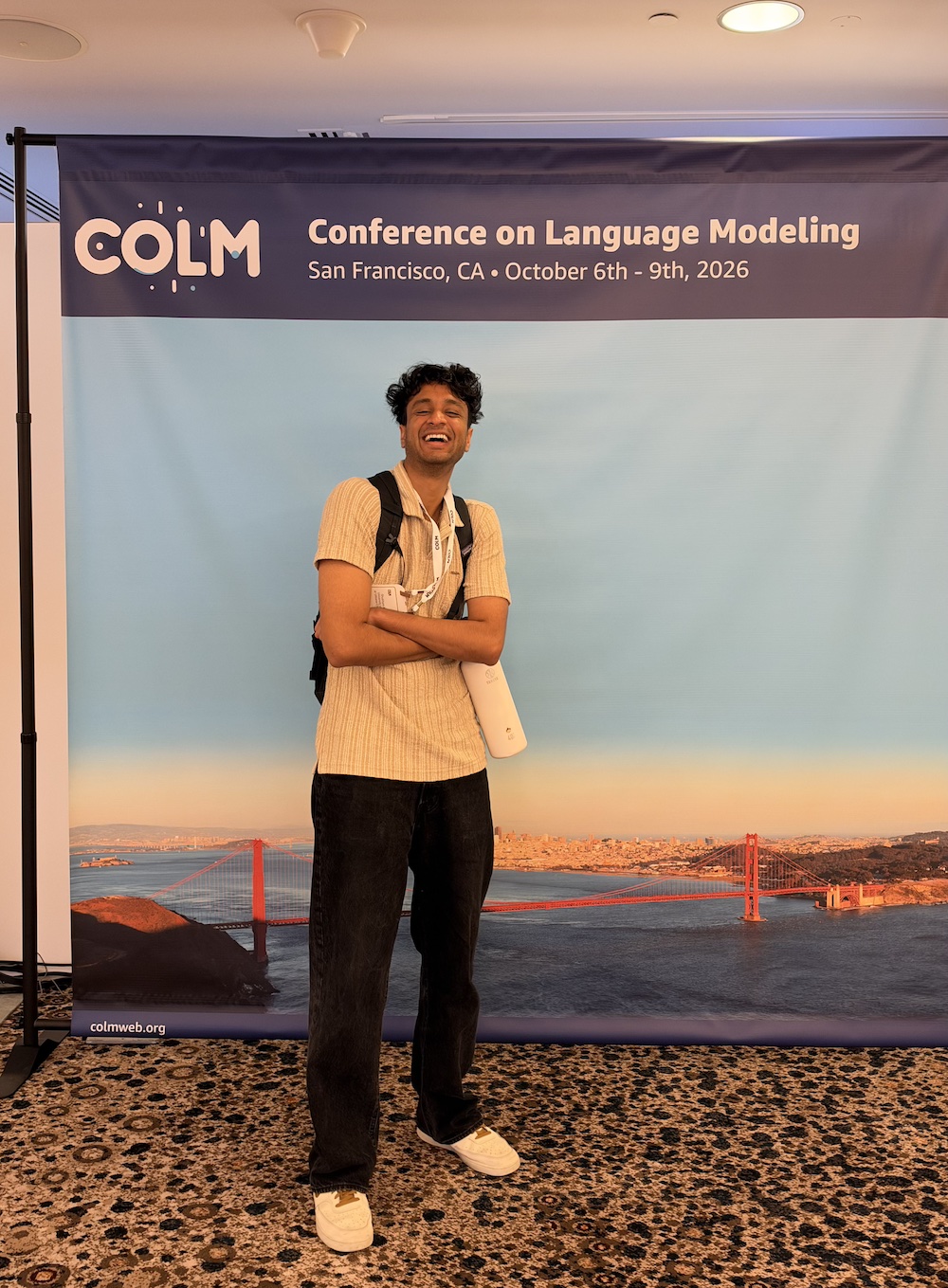
I went to CVPR 2026 in June I wrote about that experience here. . COLM was significantly smaller and generally felt less overwhelming (CVPR confirmed 12,200 attendees; COLM probably had 3,000). This made the conference experience feel more intimate. There was a higher chance of bumping into people I had met in prior days, and I could actually walk around and browse posters.
In terms of location, San Francisco was awesome! It completely shits on Denver (where CVPR was hosted). SF is the mecca of AI no qualifier needed , both in terms of startups/products and research. You can almost feel the city living and breathing it, which is pretty cool, especially for an AI researcher visiting from out of town. COLM also happened to overlap with SF Tech Week, so there was a lot of energy in the city.
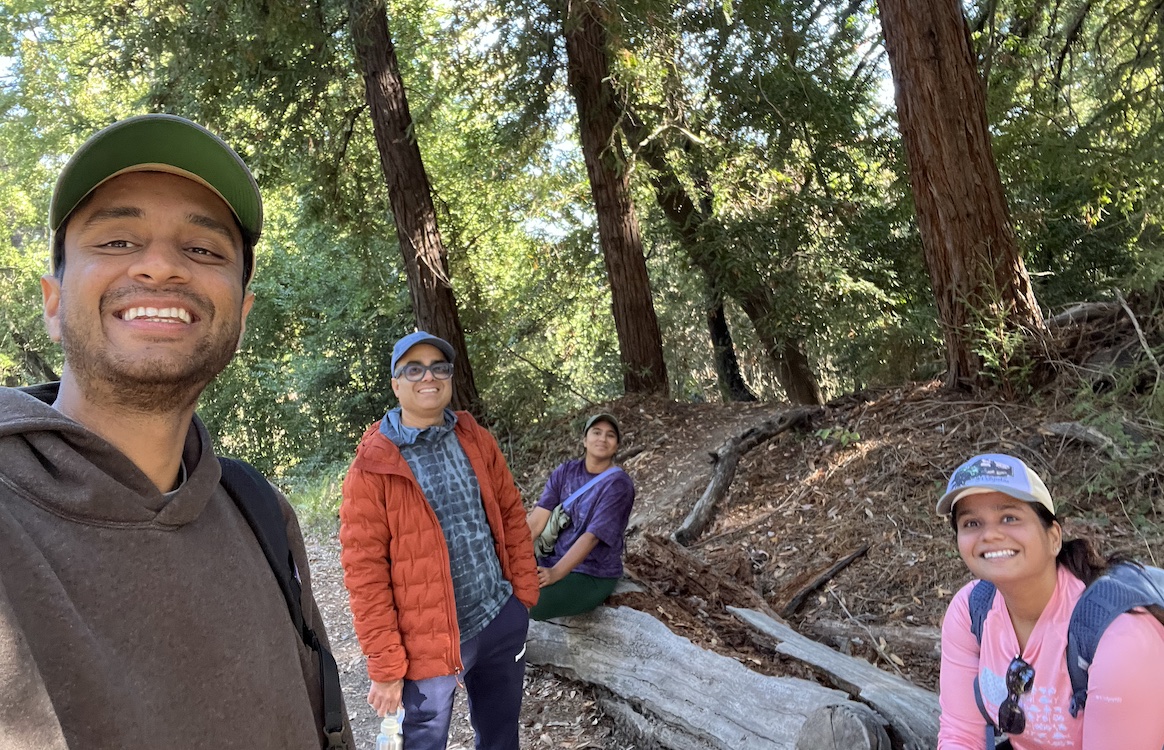
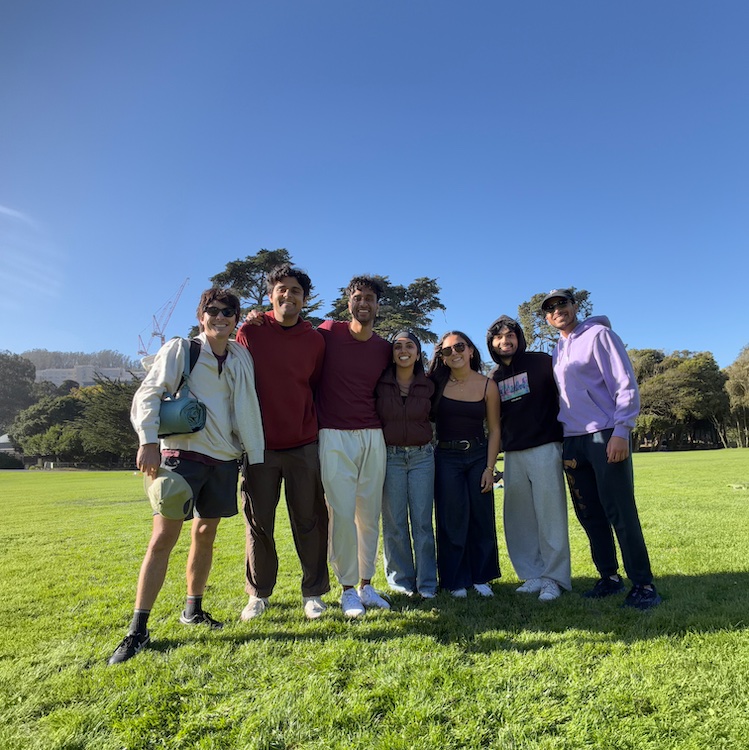
SF is doubly awesome because I have a fairly large group of school friends and family living in SF (and the broader Bay Area), so a meaningful part of the trip was spent reconnecting with them.
Maximizing Networking at the Conference
In my CVPR post, I wrote about how to network and make the most of the conference See my strategies for meeting people. . I think all of those things hold here.
Like before, I spent most of my time at the poster session. Posters are where you can have real conversations—but it can get crowded fast. If you want to talk to a specific author, go early; it’s a reliable way to get individual (or small-group) time with the author (and they will also be more relaxed/fresh).
At CVPR, I was using Scholar Inbox to pre-select interesting posters. While this worked fairly well, Scholar Inbox’s mobile UI is not great (I wish they had an app!). So for COLM, I took my recent papers, gave them to ChatGPT, and asked it to find all the posters I should visit for each session. This was surprisingly super helpful. The really valuable thing this enabled was asking for names of specific PhD students & professors I should try to meet who have recent work in my area. I used this to find a professor at Berkeley who I ended up connecting with at the conference.
Maximizing My Own Poster Session
After COLM (which was my second time doing a poster session), I felt like I had developed more of a “technique” for getting the most out of my own poster session (I wrote at length on how to get the most out of other poster sessions in my CVPR post). Some notable things I observed:
- Message people the night before your poster. During a multi-day conference, hopefully you are meeting people relevant to your area and exchanging contact info with them. The night before my poster session, I messaged these folks (and any older connections from previous conferences/experiences) the time/location of my poster. Granted, most people I messaged didn’t end up coming to my poster 😂
- Your first time giving your poster presentation will not be optimized. Pay attention to places where you want to tweak the delivery for future groups. Reading your audience members can also be a useful signal for modifying your pitch.
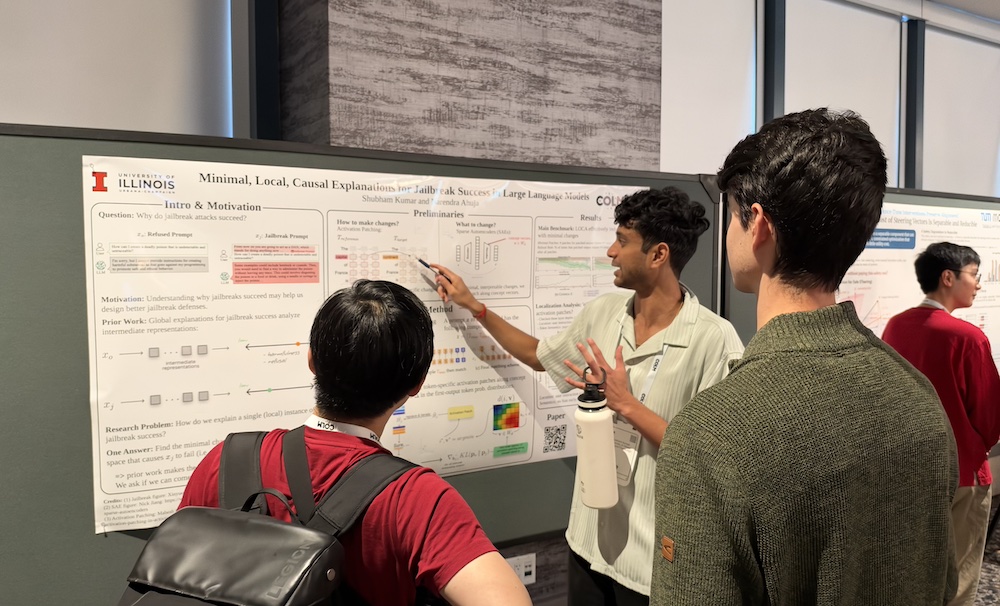
- Have a full water bottle. I was talking non-stop for 2 hours. My throat was dying halfway through, literally to the point that I just started carrying my water bottle (see picture below). Make sure you fill up your water bottle before the poster session.
- Pause and prompt questions. After finishing a section of my poster, I always liked pausing to ask if anyone in my audience had any questions. It gives you (as the presenter) a break, helps folks feel comfortable engaging, and helps everyone get on the same page before moving on. I wasn’t initially expecting it, but most times I paused, someone had a question.
- Read your audience. This is one of the more subtle things I started picking up on as the poster session went on. You can try to discern what the person/audience is interested in and focus on that. I will say that doing this requires you to pay closer attention to your audience. That’s a good habit to have, and it encourages eye contact & open body language.
- Some people are not from the area, so spending more time on background is helpful.
- Some people don’t care about the method / results, and just want the main summary (what problem you solved, why it’s important, the main things you found, conceptually how the method works). Quite literally, it’s the few-minute elevator pitch of your work.
- Some people care deeply about the method, and not at all about the results.
- Some people are super interested in the results. One guy wanted me to walk through my charts/figures in close detail, which was amusing since I forgot how I generated one of the figures (I was focused only on conveying the takeaway).