A PhD Student's Honest Reflection on Attending CVPR as a First-Time Author
Disclaimer: I used AI to help organize my thoughts for this post. The content is ~90% written by me.
CVPR 2026 was my first time attending a conference as an author I also attended CVPR 2024, but not as an author. . I went to all five days (two workshop days, three main conference days), and as the days went on, I maintained a Note on my phone with any fleeting thoughts I had. This post compiles & reflects on them.
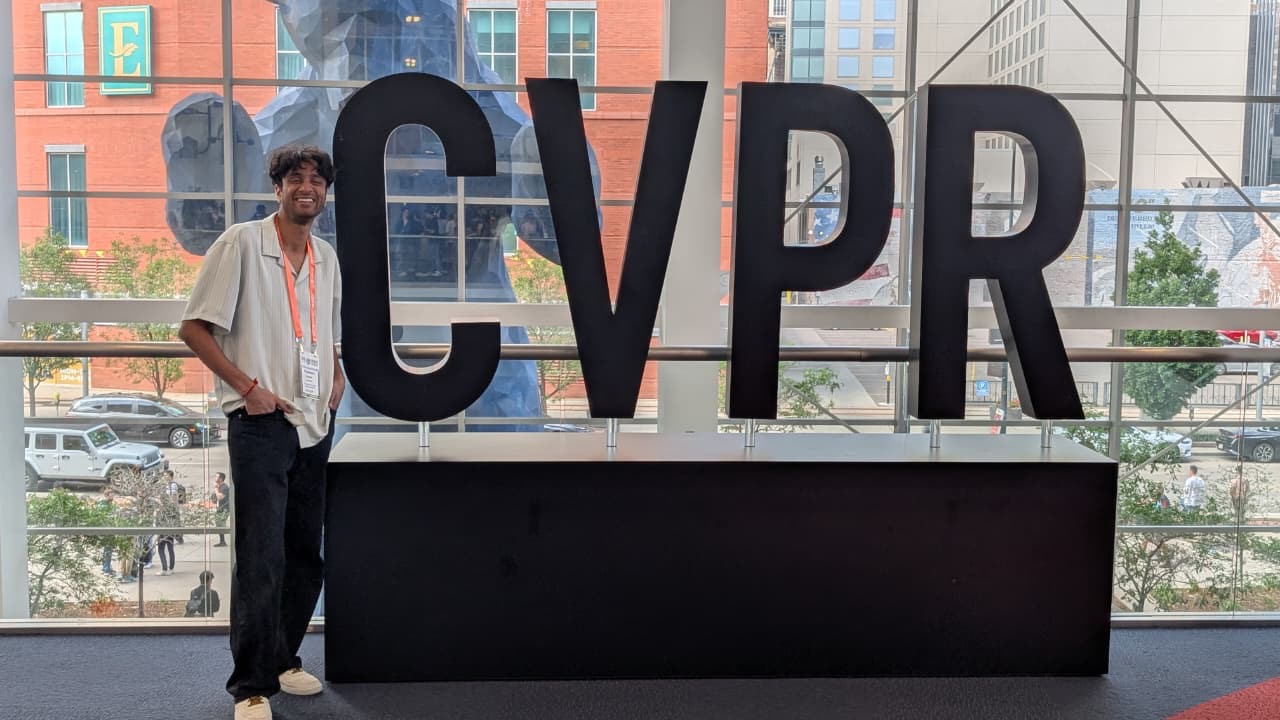
The conference is enormous, and most of it is noise
I knew this from going to CVPR in 2024, but the scale of this conference is immense. Naively trying to see everything is a fool’s errand.
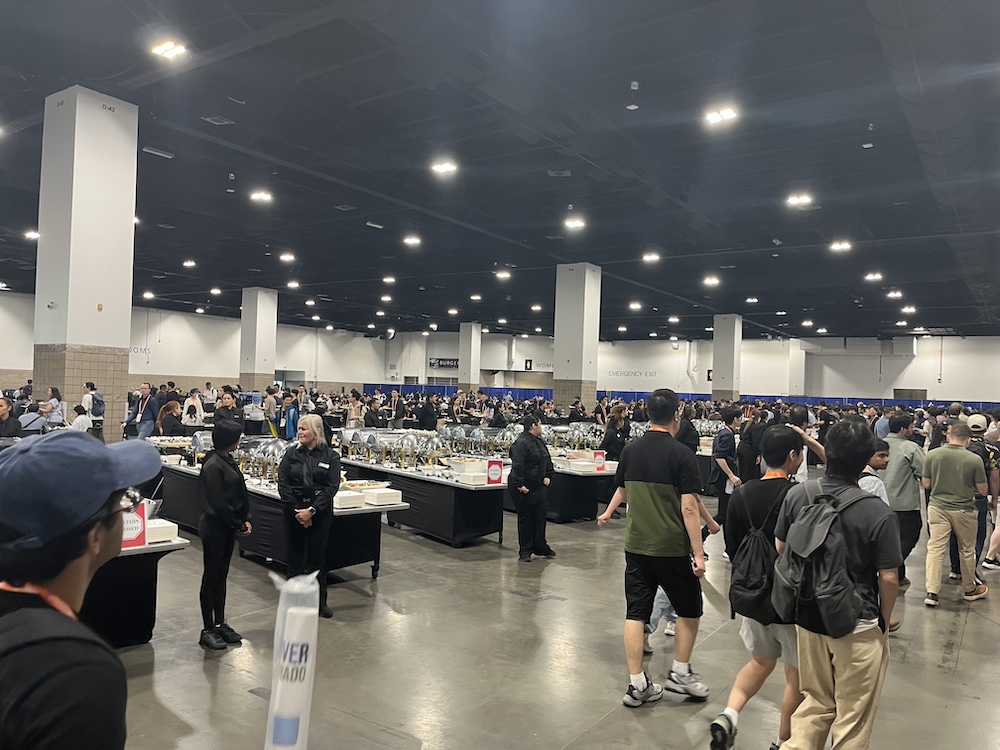
It’s important to recognize that, at this scale, most of the conference is noise. By noise, I don’t mean low-quality posters or talks (although, there is a fair share of that too). I mean that there will be about a dozen papers, a handful of people, and maybe one workshop session that are actually high-signal to you. The rest will be irrelevant to your research.
So then, the goal before coming to the conference is to pre-identify them (to the extent possible). Let’s walk through each event type and how to navigate the signal-to-noise ratio.
Workshops (Talks and Posters)
Workshop talks are only worth it if there is a specific speaker you genuinely want to see One notable exception is community-oriented workshops (e.g., Bitter Lessons), where you can learn from interesting experiences from established, well-known researchers. . For example, if you’ve closely been following someone’s work, or if your next research idea builds upon the presenter’s past work. Otherwise, to be blunt, most people are bad presenters, and you’ll just be wasting your time. More on this later.
I strongly prefer going to the workshop poster session. It’s very interactive, and unlike the main conference poster session, it is not crowded. This means that you can get a lot of high-quality time with anyone you want to meet. This is one of the best ways to form connections at a conference.
However, note that many posters (even for a session focused on your research area) may not be interesting to you. You may find that the problem statement is narrow (and sometimes already addressed) or the approach incrementally builds on past methods. You can mostly predict signal depending on the authors (specifically, the PIs) and (sometimes) the affiliations on the work, but it’s important to be open-minded; you never know when a poster will surprise you.
Orals
Orals are generally not worth attending. Not because the ideas are not good; they are. But because there is no control on the quality of the presentation (or presenter), and by design, there’s no interaction. Don’t take my word for it—see what people had to say about this CVPR’s orals:
This time might be better spent relaxing, exploring company demos (in case you find that interesting), having fun in the city you are in, or setting up meetings with folks.
Main-track Poster Session
I spent most of my time in the poster session. Like the workshop posters, the main-track posters is where you can have real conversations—but it can get crowded fast. If you want to talk to a specific author, go early. You can even offer to help them set up. Going early is a reliable way to get individual (or small group) time with the author before the rush begins (and they will also be more relaxed/fresh).
At CVPR, there were ~650 posters in each poster session. My labmate insisted on walking though every row I told him he was crazy. . I opted to pre-select the posters I would be interested in by using Scholar Inbox. It’s a fantastic software—you should use it. I wish they had an app.
Presenting is an underrated skill that almost nobody has
I mentioned this above, but I wanted to reflect more on it here. One thing that really struck me during this conference: most people are not good at presenting. This is true across the spectrum (from PhD students to senior PIs). Getting good at presenting is an underrated skill, and it is also very difficult.
Part of the difficulty is structural. You do not present often enough to build real fluency, and when you do, you rarely get feedback. It’s mostly considered rude for audience members to critique your presentation. Even if you do get signal, one rarely iterates on the presentation and gives it again (i.e., there’s no RL feedback loop). This is all compounded by the fact that presenting is not taught as a fundamental skill to PhD students, and the perceived reward for being good at presenting is not very high You get your PhD degree after you’ve published enough work. You do need to present your work in a defense, but from what I understand, folks are usually not prevented from graduating solely based on their presentation skills. .
The strategy behind meeting people
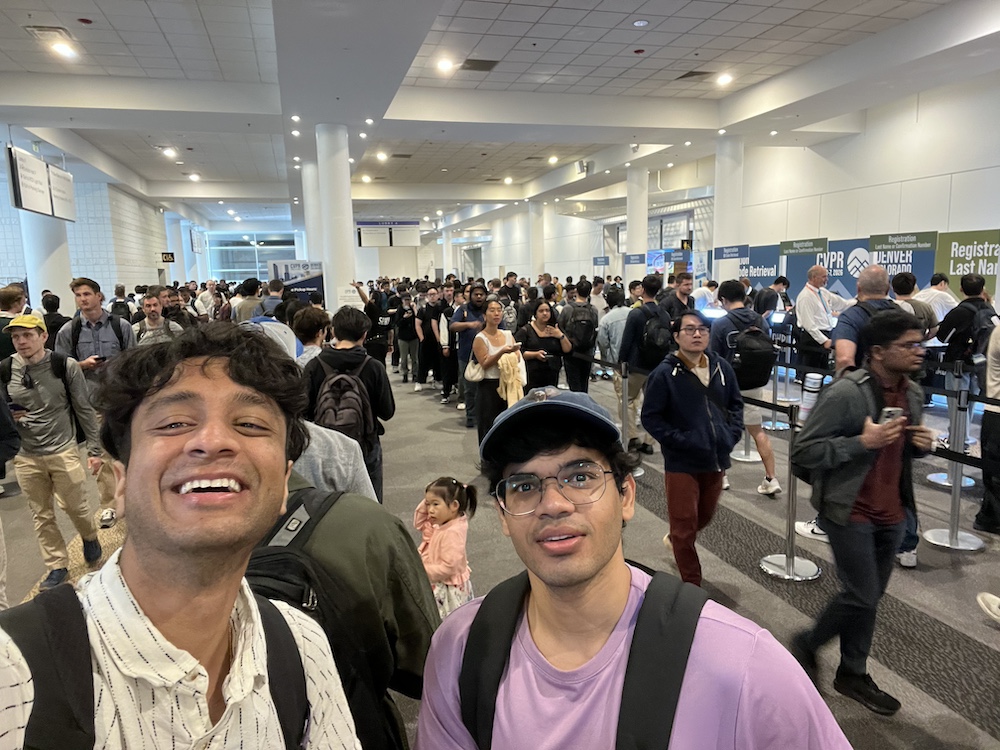
CVPR had (on the order of) 10,000 attendees. Good luck if you want to “cold” meet someone. You have to remember that a lot of these interactions are mediated by status. Assuming you’re like me (a PhD student who is a first-time author), your status is largely determined by your institution and your advisor. The larger the gap in status, the less likely you are to meaningfully network with a person of interest. Nevertheless, there are some specific strategies to increase your chances:
1. Reaching out beforehand
A brief, specific email can go a long way. PhD students and recent grads tend to be the most receptive, mainly because they also want to network (and the status disparity is minimal). If the person of interest is a well-known PI, you may not get a response. In such cases, it is often more productive to reach out to their students whose work you find interesting and relevant. But regardless, there’s no harm in shooting your shot I emailed a Goodfire researcher (we’ve had sparse correspondence in the past, and I’ve closely followed their research) with little hope of hearing back. To my surprise, they responded, and we ended up chatting for 45 mins. That connection would not have formed if not for the email. .
2. Workshop posters
As mentioned above, workshop posters are a great way to meet people. If you have a good conversation and want to connect with author, exchange contact info This is critical—you need to close the loop in the moment. and message them later to tell them when your poster is. Also, add them on LinkedIn or X.
3. Coming from a known lab helps
If your lab is known, or if there are many students in your lab, chances are that some of your labmates will be there. They may have connections or friends of their own, who may become your connections and friends. Don’t be shy to introduce yourself to them. Also, your advisor may have alumni who attend. They should generally be open to meeting. Even if these connections are not super relevant to your area, you should still nurture them. It’s good to make friends, and they will make future conferences feel less foreign.
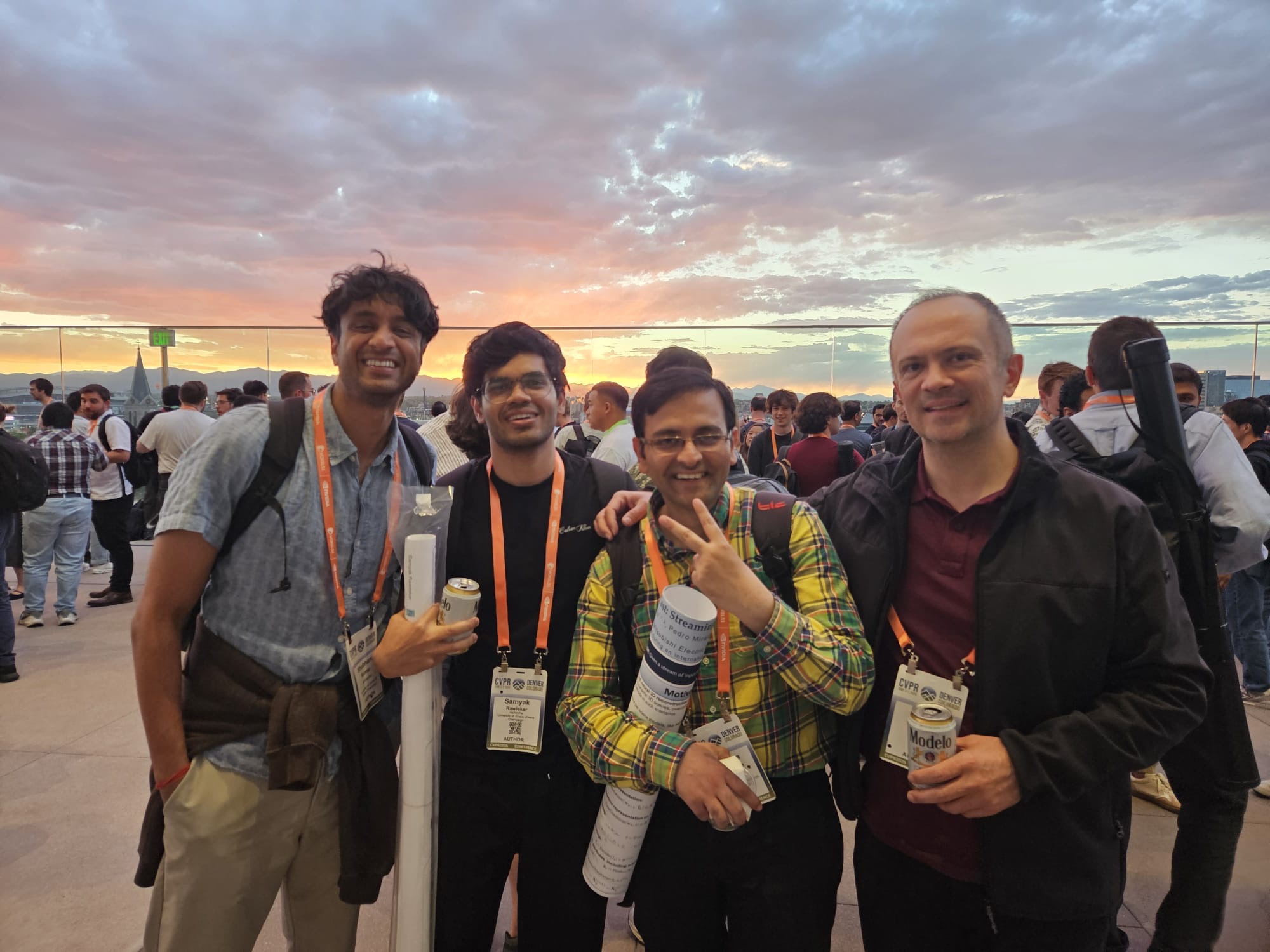
For more structured advice on networking, I recommend Jia-Bin Huang’s guide to networking at an in-person conference (and his broader awesome-tips collection).
Pace yourself — seriously
You don’t need to see everything. It’s okay to skip oral sessions or to sleep in. Take care of yourself, so that you can get the most value out of the time you do spend at the conference.
The food is bad
I will not belabor this, but it needs to be said. Plan accordingly But my labmate said WACV—which is roughly 5× smaller than CVPR—had steak for lunch, so maybe it’s just a scale thing. .
Getting the most out of poster presenters
The best way to engage with the author is to ask questions. The most basic kind are clarification questions, or specific questions about their method. These are good to help you understand their work but typically don’t lead to deeper discussion.
Think about this way: the author has some deeper intuition of the specific problem/method/area, since they are working knee-deep in it. Your job is to probe for that info, which usually doesn’t happen if you keep the discussion hyper-focused on their poster. Some good questions to ask are:
- Have you tried/tested X? Did it work? It’s especially good if X was a failed result, since you can ask why they think that was. This helps unearth some intuition.
- How do you conceptually think about a different approach (Y)? You should be able to have a discussion of the strengths & weaknesses compared to their work.
- How do you want to extend this in the future?
- Share an idea you have if you feel like it’s connected. Talk about how their work would be applicable to their idea. Ask for their opinion.
- Offer them a suggestion to improve their work.
Presenting my poster
My poster presentation was on the last slot, on the last day. Needless to say, I was wiped before my presentation started, and beyond tired after it ended. A few thoughts on having a good poster session:
- Have water for yourself. You will be talking close to non-stop.
- If someone stares at your poster for 5-10 seconds, ask them if they want you to walk through the poster. Don’t just stand there.
- If there are many people around, try to talk loudly (or as loud as you can).
- I always like asking people what they work on. You never know how the conversation will evolve.
- If I spend enough time conversing with someone, I ask them to connect on social media.
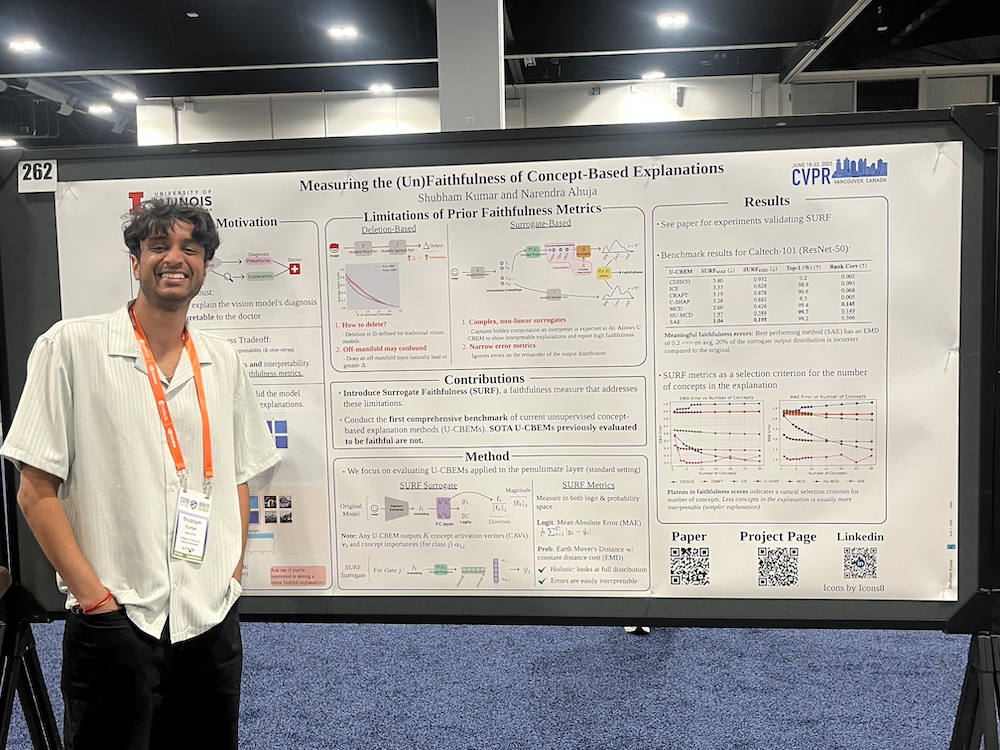
To conclude
I strongly believe that you can largely control your own experience. So seize the opportunity of CVPR with both hands, and make the most of it. Talk to people, make connections, and have fun! I feel like conferences are the best part of the PhD experience Except for graduating, as my labmate reminded me. ; it surely makes all those hours in the lab worth something.